- Home
- Krav Maga Blog
- Krav Instructors
- Train in Israel
- Tour Train Israel
- Krav Shop
- DVD
- Kickboxing
- IKI Near Me
- Seminars
- IKI Membership
- On-Line Training
- Krav Maga Training
- Testimonials
- History Krav Maga
- Instructors Page
- Past Blogs
- Spanish
- Italian
- Certification
- Contact
- Holland Seminar
- Vienna Seminar
- Poland Seminar
- Italy Seminar
- Belt Requirements
Mantle of Leadership
BY MOSHE KATZ
CEO
ISRAELI KRAV INTERNATIONAL
March 7, 2026, Judea, Israel
The mantle of leadership, glory, prestige, fame, people crave it. But when it is achieved the ugly truth emerges, it is not fun, it is not easy. We see in modern times the pure ugliness of politics, people who sincerely want to make a difference (Yes, some are sincere, not all are after power and money, some already have all that, or don't need it) and when they come to power, no matter what they do, they are crucified publicly. Whatever they do, there will be critics.
I know this from my own life, and the lives of family members. As a son of a rabbi I saw a man, my dear father may he rest in peace, who truly wanted to make a difference. We can argue about a politician, I can say he is sincere, you can see he is after power, but with my father, whom I use to illustrate my point, I know that he was sincere. I know that he chose this profession over more rewarding financial careers because he sincerely and honestly wanted to better the Jewish people and help the State of Israel. Ultimately the ugliness of politics forced him out, in a bitter and depressing way. He was not to blame but now he was over 50 years old, with four teenage sons, a mortgage and no income or prospects. Ultimately through sheer determination he made it, and the money he earned in the next four and half years was what my mother lived on for 17 years after he passed away. The lesson to me was the pain of leadership, no matter how sincere, pure and honest you are.
My father instilled in me a love of history, Jewish history, and our nation. Today I was reading a book I took from his library when my dear mother passed away. It is volume 3 of "The Rise and Fall of the Judean State", over 1,500 pages dealing with the years 67 - 72, C.E. In it we read about Rabban Yohanan ben Zakai. יוֹחָנָן בֶּן זַכַּאי
But first, a little background.
The year is 68, it is a tragic time for the Jewish people, and the pain and the consequences of that fateful year linger to this very time. The Jewish people are involved in a series of civil wars within the city of Jerusalem, and the Roman army under Vespasian is outside, biding its time and waiting for the perfect time to attack. The situation is hopeless. In those days, the first century, the title of rabbi does not yet exist, but Ben Zakai is a respected, revered, scholar of the school of Hillel, a master of Jewish law. He sees that the war is lost and he tries to salvage what he can. He arranges his escape from the besieged city of Jerusalem by faking his own death and being brought out in a coffin. Later he will meet with Vespasian and work out a deal to preserve Judaism.
At this time the Jewish religion, the faith, was centered around the Holy Temple, the Beit HaMiqdash of Jerusalem. Atonement was achieved via animal sacrifice. The Cohen clan was in charge of all religious matters. And then...in the summer of the year 70, it all came to an end. The city taken, the Holy Temple burnt to the ground, the people slaughtered, the leaders taken to Rome for public humiliation and execution. and it seemed the end was near.
But then Yohanan Ben Zakai emerged, he had negotiated with Vespasian to allow the scholars to survive and move to a little town called Yavne, far from all the turmoil. Here he created the Jewish religion that we know today, without a Temple, without the priests/Cohen, without Jerusalem, without animal sacrifices. It was a religion that depended not on land, not on a temple, not on anything but faith and scholarship and proper deeds, it was Rabbinic Judaism.
Throughout Jewish history we have faced certain turning points where it seemed the light of our nation was about to be extinguished, and then by some divine miracle a man came along to save the day. In the year 70 it was Yohanan Ben Zakai, who then was awarded the title Rabban, meaning leader, or president, for he safeguarded the future of the Jewish people after the Great Revolt by adapting it to the circumstances.
Rabban Yohanan Ben Zakai convened the surviving elders and enacted all sorts of rules and regulations. The synagogue was formally established as a place of prayer as prayer replaced animal sacrifices. Formal set prayers, liturgy and times of prayer were established, a court of law with the power to promulgate new laws was established to replace the fallen court of Jerusalem. Judaism was given the tools to survive without political independence, without a temple, without the atonement of animal sacrifices, without Jerusalem. Modern Judaism was born. Rabban Yohanan Ben Zakai created a format that would allow Judaism to survive nearly 2,000 years, mostly in exile, mostly under severe oppression, survive and thrive! He was the man of the hour, he was the man of the millenium and beyond!
But what was his fate? We learn that he left his position, he left all that he had built, and he moved to a small village called Brur Chayil, (survived until modern times under a corrupted Arabic name, and of course proclaimed as an "indigenous Arab town")
ת"ר צדק צדק תרדף הלך אחר חכמים לישיבה אחר ר' אליעזר ללוד אחר רבן יוחנן בן זכאי לברור חיל
But how? He was such a great man! We owe him so much!
We read, "The tenure of Rabban Yohanan ben Zakkai as nasi (president) was brief. His departure was prompted by the strong opposition that had developed against him among various factions..." (Page 179, The Rise and Fall of the Judean State, Vol. 3)
The high priestly family opposed him because they felt that the position should go to their clan, (not that they did anything to earn that position). Rabban Yohanan ben Zakai was also a Cohen/priest but of a "less distinguished" clan. Others felt the position should go to a descendant of Hillel (the great scholar of the previous generation). Others of the more conservative school felt he was too liberal in his application of the law. Others felt that since he "escaped" from Jerusalem during the siege and did not remain to die with the rebels, he was unfit for leadership. They called him a "quitter". Criticism came from all directions. And yet his bold leadership is what allowed Judaism to survive and transition to a form that would allow it to survive adversity for the next close to 2,000 years. The man who emerged at perhaps our darkest hour, revolutionized our approach to Judaism and led us to where we are at the present day, was still, as a leader, criticized and challenged to the point that he eventually chose to leave leadership behind and settle in a quiet village.
When one is in a position of leadership one is subject to everyone's opinion. Everyone knows better than you what you should be doing. Everyone can throw rotten tomatoes at you and point out your faults. As an American once said, you can't please all the people all the time, and a British poet wrote, you can't always get what you want.
Those of us who teach Krav Maga will be subject to criticism. But, like the great rabbi, we must be true to our path, be bold and revolutionary and try to leave a lasting impact. Today we are all grateful to Rabban Yohanan ben Zakai and there is hardly a (practicing) Jew who does not know his name. History was on his side. Remain true to your path.
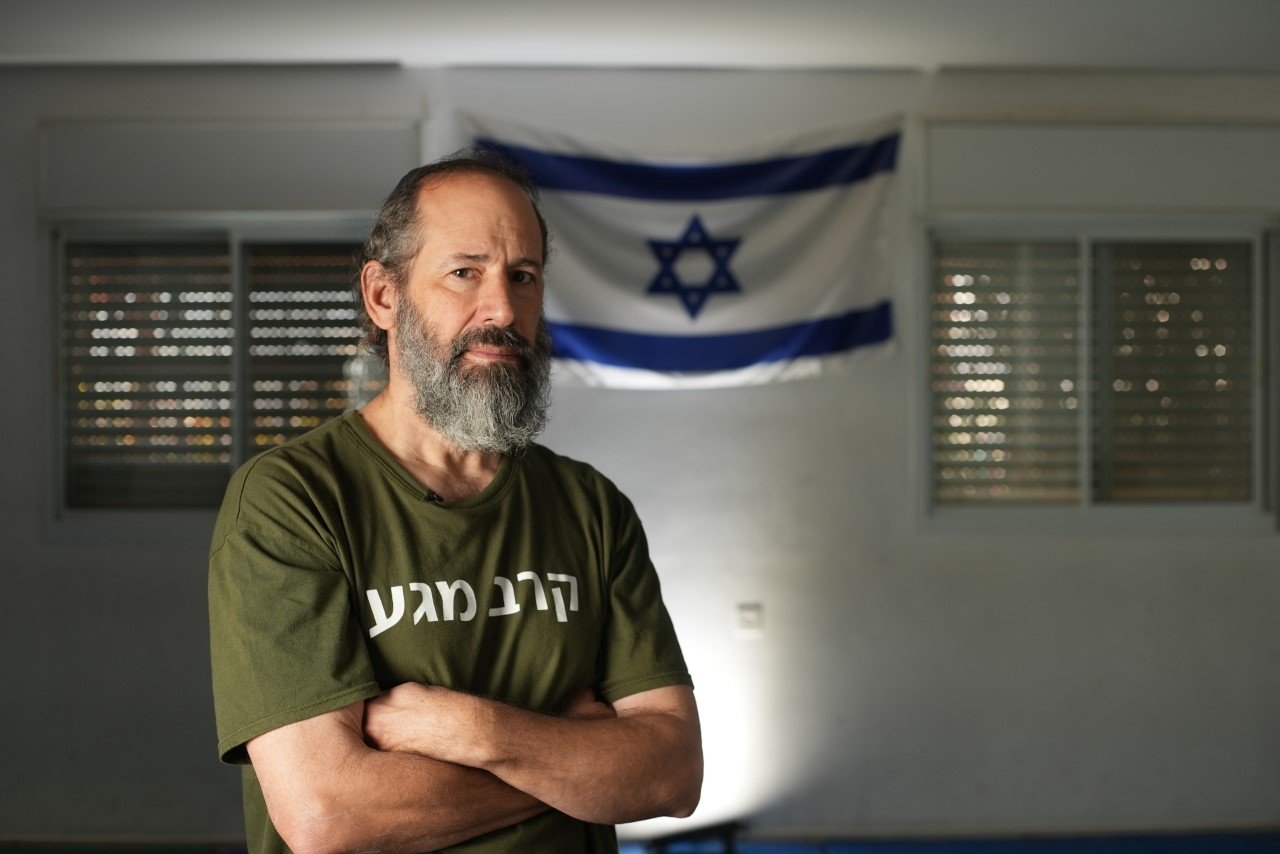
Moshe Katz, 7th dan Black Belt, Israeli Krav Maga. Certified by Wingate Institute. Member Black Belt Hall of fame, USA and Europe.
Understand the Israeli Fighting Mentality - Israel a Nation of Warriors by Moshe Katz
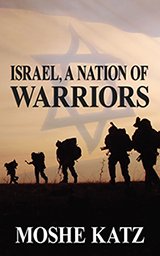
What is the cultural background of Krav Maga? What makes it unique? What makes the Israeli military so effective? Why are Israeli security systems used all over the world?
What are the Biblical origins of Krav Maga and who was the first Krav Maga instructor?
What weapons and military strategies did our Biblical ancestors use?
How has Krav Maga developed in Israel and what are its goals?
All that and more in this unique book.
Start Your REAL Training TODAY
Or is someone coming to save you?
IKI Krav Maga online distance training - Leading to ranks and certification.
Tour and Train Israel Experience
Personal Training - If you are interested in personal Krav Maga training please contact us on the form below.